Home » WHAT WE DO » About NIL
College sports are currently undergoing what may prove to be the single most significant change they will ever experience, all from one simple question: should college athletes be paid? The answer comes down to three letters: NIL.
Until recently, the question of should college athletes be paid was answered by the fact that across all sports and universities, student athletes were considered amateurs and therefore prohibited from receiving monetary compensation for their athletic accomplishments. The concept of paying college athletes, however, has been anything but a clear cut issue.
Athletes have demanded compensation through various means and coaches have been caught trying to incentivize players to come to their school through elaborate gifts or sneaky offerings of cash, but the debate about paying college athletes has never moved the needle on any concrete action. While the NCAA and individual universities have profited off of the name, image, and likeness of their student athletes for decades, it isn’t until recently that the athletes themselves are being invited to take a slice of this massive pie of revenue.
The NCAA’s board of directors officially suspended the organization’s rules prohibiting athletes from selling the rights to their names, images and likenesses. These new rules, and the various state laws that have followed, represent a major shift in the NCAA’s definition of “amateur student athlete.” The debate asking should college athletes be paid is only heating up. While NCAA have long fought to keep students out of the money-making side of college sports, athletes now have varying extents of protection, allowing them to profit by selling their name, image, and likeness (NIL) rights.
NCAA president Mark Emmert explained the decision by saying this:
While this decision will have long-term implications which are yet to be foreseen, the short-term shift in amateurism rules means college athletes can start making money now. But how?
The new guidelines provide a loose, gray area that is still being interpreted by lawyers and athletes alike. But one thing is for certain: athletes don’t need to wait for the dust to settle to start taking advantage of the new opportunities afforded them by NIL rules.
As of now, the NCAA has stated that the current rules are temporary until Congress has the opportunity to create national laws allowing for clearer regulations for future college athlete NIL deals. That means that currently all athletes have some opportunity to profit from NIL as state laws start to go into effect. So, if you want to know how exactly NIL works, who can profit off their NIL, which states have NIL laws, how athletes are currently cashing in on NIL, and/or how you can make money off of your own NIL, below is everything you need to know.
In the simplest of terms, Name, Image and Likeness (NIL) is a term that describes the means through which college athletes are allowed to receive financial compensation. NIL refers to the use of an athlete’s name, image, and likeness through marketing and promotional endeavors. This can include autograph signings, product endorsements, social media posts, and more.
At the same time, it’s important to understand what NIL does not mean. NCAA rules still prevent schools from paying players directly. This means that college coaches cannot offer money as an incentive for high school athletes to come play at their school, nor can athletes receive compensation directly from their university based upon their athletic achievements. Because the NCAA still intends to maintain its amateur sports status, paying athletes for their play on the field isn’t possible. However, NIL is the workaround for athletes to get paid without technically being considered professional athletes who make a living playing their sport.
NIL can trace its origins to a class-action lawsuit filed in the late 2000s that marks the beginning of the “should college athletes be paid” debate. Former UCLA basketball player Ed O’Bannon argued that college athletes should be compensated for the use of their name and image in video games. Eventually, A judge ordered the NCAA to pay $44.4 million in attorneys’ fees and another $1.5 million in costs to lawyers for the plaintiffs in the Ed O’Bannon class-action antitrust lawsuit. This case opened up the doors for more questions and lawsuits around athletes’ name, image, and likeness.
At first glance, NIL laws seem like something that would only apply to the top 1% of NCAA athletes—think the best college football quarterbacks, projected lottery picks, and other superstars. But in reality, that may not be the case.
Remember, the new rules allow athletes to profit from any of the following activities:
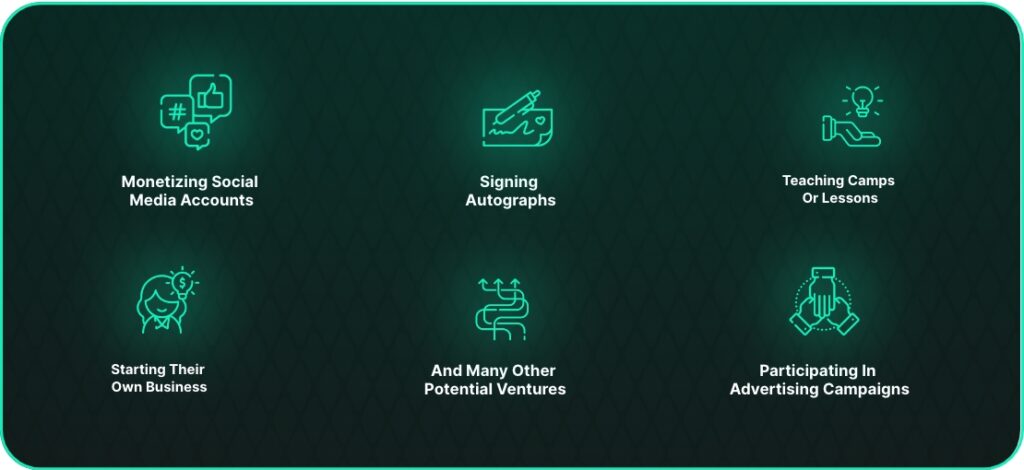
These types of activities are hardly limited to a certain group of athletes. Heisman Trophy candidates and backup linemen have an equal opportunity to make a profit. It depends on the avenues they choose to pursue. While one athlete can make more money signing autographs, another may be able to generate profit from giving lessons. It’s also hard to make an argument whether one school is more likely to see athletes make a profit off of their NIL than another.
While it’s easy to envision large state schools such as The University of Texas or Ohio State quickly enabling their athletes to make a profit, it’s just as likely that small schools with a dedicated local following may actually afford a better market for various athletes.
The key here is that performance on the field has a relatively small impact on NIL potential. Of course, athletes who play a more publicized sport and who perform in a way that brings them increased attention have the ability to raise their NIL ceiling and increase their market potential. Yet, at the same time, athletes who can carve out a niche—be that through social media or a dedicated local following that regards them as a hometown hero—have a sizable advantage and a large NIL potential.
Whether an athlete chooses to post certain products on social media, sign autographs, teach camps, or promote a local pizzeria is completely up to them. The current NIL market is prepared to reward the athlete who creatively uses their name, image, and likeness to generate a profit.
When thinking of NIL potential, one may go first to college football—by far the most lucrative of the college sports. But while many projected that the majority of NIL money would lean toward male athletes, the opposite has proven true. In what may come as a surprise to some, the first athletes to cash in on their NIL potential were two women’s basketball players.
Hanna and Haley Cavinder, twin sisters who play for Fresno State’s basketball team and share millions of followers on social media, worked with Icone Source and Boost Mobile to strike a deal within hours of the NCAA instating the new NIL rules.
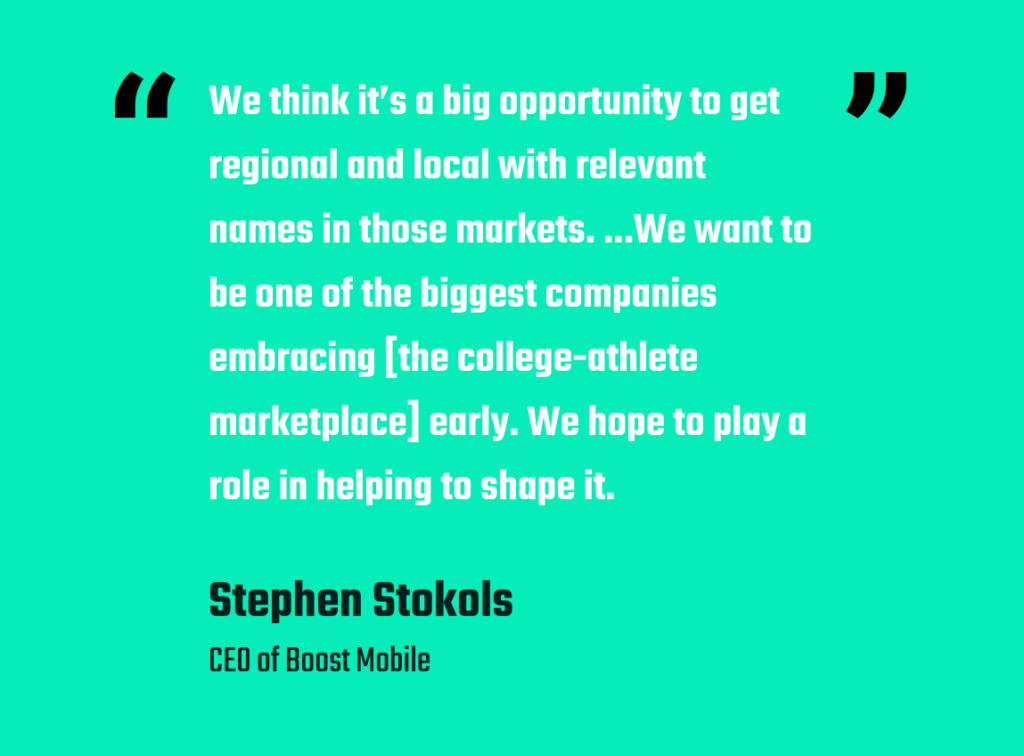
College athletes aren’t the only ones aware of the potential these new rules afford. Stephen Stokols, CEO of Boost Mobile, shared that they hope to partner with hundreds of student athletes in the coming years. Plus, while they’ve chosen to start with the Cavinder twins as a national campaign, they also have plans for athletes at a local level.
What that may look like has yet to be seen, but it’s clear that the Cavinder twins are just the start.
But it’s not just the big names who are striking deals. Athletes have announced partnerships with local companies like a fireworks warehouse in Iowa and a barbecue joint in Arkansas that sponsored the team’s entire offensive line. Two Auburn football players struck noticeable deals as well. Bo Nix, quarterback, signed a “sweet” deal with Milo’s sweet tea, and Shaun Shivers announced a partnership with Yoke, a platform that lets fans play video games with (and against) athletes.
Other women’s basketball players who have made a splash include the University of Oregon’s Sedona Prince who offered her 2.5 million TikTok followers, 240k Instagram followers, and 43k Twitter followers custom merchandise. A similar move saw LSU gymnast Olivia Dunne launch a billboard in Times Square for her 3.9 million TikTok followers and 1.1 million Instagram followers (numbers that explain why she is projected to be the top-earning NIL athlete).
A selfless example of how NIL can be used for more than just money comes from Florida State offensive lineman Dillan Gibbons who shared the he would use the new rule changes to raise money via a GoFundMe to help his friend, Timothy Donovan, who suffers from an incurable disease, attend a Seminoles game in Tallahassee this season.
Also, in a move away from sports, Marshall offensive lineman Will Ulmer is hoping the new NIL rules will kick off his music career. On the other hand, with something tailored more specifically to sports, Dontaie Allen announced his own line of custom merchandise. Then, of course, there’s another example of a deal enabled with the help of Icon Source in Antwan Owens and four other Jackson State players signing a deal with 3 Kings Grooming, a black-owned hair product business.
Again, these are just some examples of the various creative ways athletes are beginning to test the waters. But when it comes to which deals make the most sense for which players, a lot of it boils down to the state in which these athletes live and play.
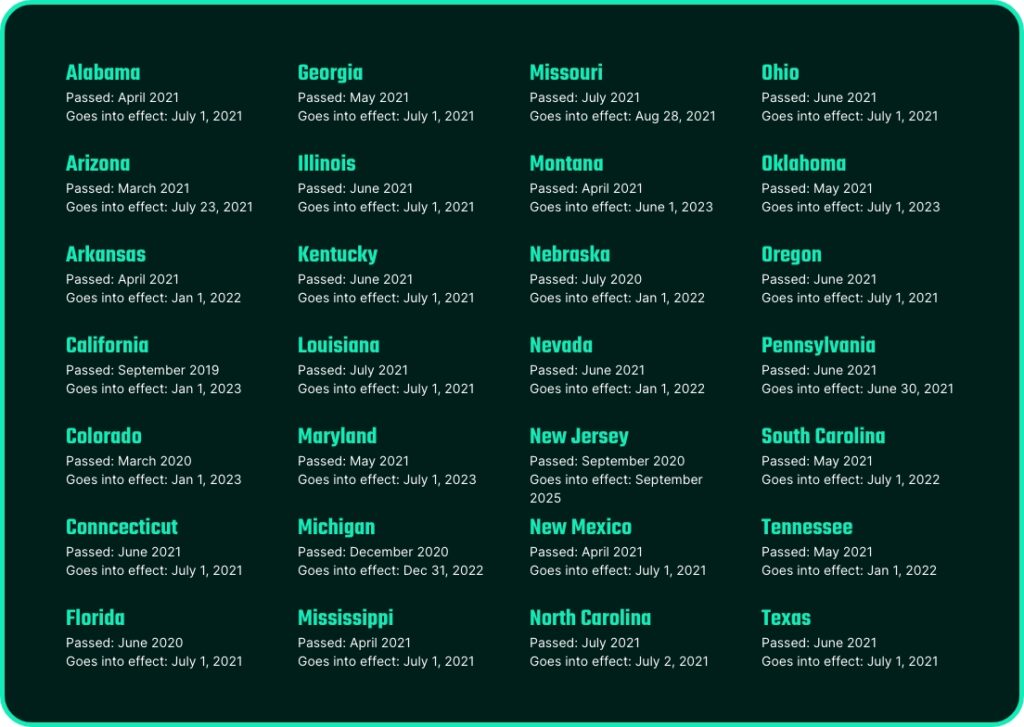
The NCAA has instructed schools located in states without an active NIL law to create and publish their own policies in the hopes that this will clear up any gray areas and create a plan to resolve the inevitable disputes that will arise. Schools still asking should college athletes be paid are already behind. At the same time that the NCAA is pushing individual schools, others are focusing on the national level.
Almost a dozen bills have been proposed by various members of Congress aimed at reforming college sports and answering the should college athletes be paid question. While some focus specifically on addressing a national NIL standard, others have brought up the idea of giving athletes additional medical benefits, more educational opportunities, and the rights to collectively bargain. However, disagreements have stalled any NCAA legislative efforts in Washington, D.C., leaving these decisions primarily in the hands of individual states until something changes.
In summary, if a college athlete lives in a state where legislation has been passed, they can profit from their name, image, or likeness according to state law. And if a college athlete lives in a state that is without current NIL laws, it’s up to the individual schools to create a policy for athletes to follow. While the NCAA’s guidelines prevent direct pay to athletes and make it clear that NIL deals cannot influence recruiting, everything else is currently up to the individual states and universities.
As politicians, schools, and the parties interested in paying them wade through this brand new marketplace, it’s up to athletes to capitalize on their NIL potential. Of course, athletes already have their days filled with academics, sports activities, and studying, so choosing someone trustworthy to come alongside them and guide them through this ever-evolving space without making NIL an additional daily burden is going to be crucial.
Since 2018, Icon Source has been the tool for professional athletes and their agents to connect with a much broader group of brands. This has empowered various brands (both national to hyper-local) to find the right athlete, connect with them on demand, and execute contracts through our wizard—all while protecting the athlete’s interests.
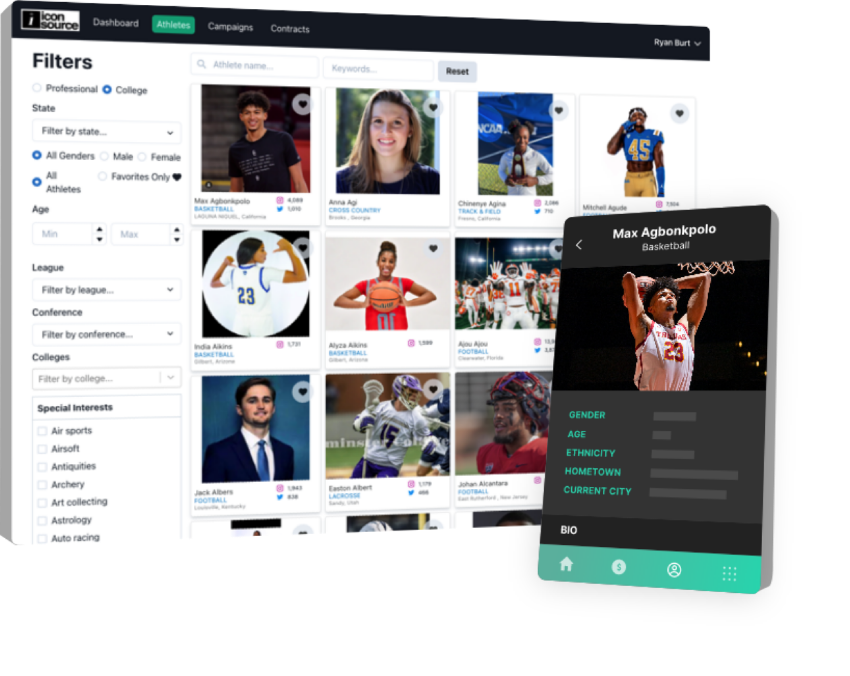
With Icon Source, student-athletes can manage their profiles on a single, easy-to-use mobile app. This app sends all required reporting data directly to the school, or to the school’s desired disclosure software. Plus, no need to worry about taxes. No matter how many deals, large or small, that an athlete completes on Icon Source, they will be provided with a single 1099.
Most importantly, Icon Source forces brands to use a single, non-editable contract, which protects student athletes from unforeseen NIL issues. With ZERO charge until Icon Source brings value to you, creating a profile is the risk-free way for college athletes to explore how they can capitalize on their unique NIL potential.
President / Agent
204 573 8080
dwolski
@2112hockeyagency.com